On March 28th, Premier Li Keqiang presided over a State Council executive meeting to determine measures to deepen value-added tax reform and further reduce the tax burden on market entities.
Starting from May 1st, 2018:
1、 Reduce the value-added tax rate for industries such as manufacturing from 17% to 16%, and for industries such as transportation, construction, basic telecommunications services, and agricultural products from 11% to 10%. It is expected to reduce taxes by 240 billion yuan throughout the year;
2、 Unified standards for small-scale value-added tax taxpayers. Raise the annual sales standards for small-scale taxpayers of industrial and commercial enterprises from 500000 yuan and 800000 yuan to 5 million yuan, and allow enterprises that have already been registered as general taxpayers to transfer to small-scale taxpayers within a certain period of time, allowing more enterprises to enjoy the benefits of lower tax rates;
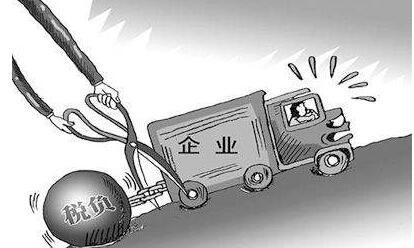
3、 A one-time refund will be given to eligible enterprises in advanced manufacturing industries such as equipment manufacturing and modern service industries such as research and development, as well as power grid enterprises for input tax that has not been fully deducted within a certain period of time.
The above three measures will reduce the tax burden on market entities by more than 400 billion yuan throughout the year, benefiting both domestic and foreign-funded enterprises equally. The meeting pointed out that this move is to further improve the tax system, support the development of the real economy such as manufacturing and small and micro enterprises, and continue to reduce the burden on market entities.
According to the requirements of the government work report, more than 800 billion yuan will be reduced in taxes for enterprises and individuals in 2018, promoting the transformation and upgrading of the real economy, and focusing on stimulating market vitality and social creativity. In the view of Wang Jun, Director of the State Administration of Taxation, the 800 billion yuan tax reduction targets clearly, not only reducing the tax burden on the real economy such as manufacturing and transportation, but also promoting economic transformation and upgrading; It also reduces the tax burden on small and micro enterprises and the working class, encourages entrepreneurship, promotes consumption, and improves peoples livelihoods.
Reduce the burden on the manufacturing industry
The executive meeting clarified that enterprises in advanced manufacturing industries such as equipment manufacturing and modern service industries such as research and development that meet the conditions, as well as power grid enterprises, will receive a one-time refund of input tax that has not been fully deducted within a certain period of time.
He Daixin, Associate Researcher at the Institute of Finance and Economics Strategy of the Chinese Academy of Social Sciences, explained that for advanced manufacturing enterprises, in the process of technological innovation and upgrading, they need to purchase a large amount of fixed assets such as high-end equipment. If they cannot be deducted in a timely manner, it will bring great pressure to the enterprise. Currently, achieving a one-time refund of input tax will greatly reduce the burden on enterprises, thereby promoting better upgrading and upgrading of high-tech enterprises and enhancing competitiveness.
Professor Hu Yijian from Shanghai University of Finance and Economics stated that the reduction in value-added tax rate this time is mainly targeted at key supported industries such as manufacturing, transportation, construction, basic telecommunications services, as well as agricultural products and other goods.
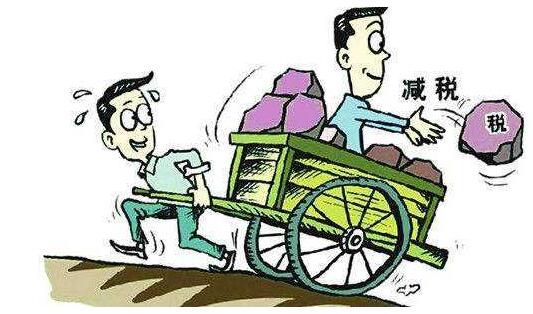
The report of the 19th National Congress proposed that in building a modern economic system, the focus of economic development must be placed on the real economy. Including accelerating the construction of a manufacturing power, accelerating the development of advanced manufacturing industries, and promoting the deep integration of the Internet, big data, artificial intelligence and the real economy; Support the optimization and upgrading of traditional industries and accelerate the development of modern service industries; Strengthen the construction of infrastructure networks such as water conservancy, railways, highways, and water transportation.
At the beginning of this year, the Ministry of Industry and Information Technology reported that China is comprehensively promoting the "Made in China 2025" strategy, and the international competitiveness of manufacturing enterprises is constantly increasing. However, at the same time, Chinese manufacturing enterprises are facing problems such as high costs, thin profits, and heavy tax burdens, which to some extent inhibit the formation of their core competitiveness. Suggest reducing the value-added tax rate, the largest tax category, to enhance the strength of Chinas manufacturing enterprises and promote the transformation and upgrading of the real economy.
Lou Hong, the head of the Treasury Department of the Ministry of Finance, stated at a press conference that driven by the deepening implementation of "Made in China 2025" and the sustained and rapid development of equipment manufacturing and high-tech industries, the tax revenue of general equipment manufacturing, special equipment manufacturing, computer communication and other electronic equipment manufacturing increased by 23.5%, 20.9% and 21.6% respectively. The tax reduction and fee reduction policies have boosted the vitality of economic entities.
In the 2017 fiscal revenue and expenditure data released by the Ministry of Finance, value-added tax revenue also dominated. According to relevant data, the domestic value-added tax revenue was 563.78 billion yuan, a year-on-year increase of 8%, accounting for 39.05% of the total tax revenue. This data also makes it the tax category with the largest proportion of individual tax revenue among all tax categories.
Lowering the value-added tax rate in the manufacturing industry is beneficial for increasing the output tax deduction amount for manufacturing enterprises, reducing the amount of value-added tax payable by manufacturing enterprises, and expanding their profit margins.
According to a report by Xinhua Fund, as a major manufacturing country, Chinas secondary industry still accounts for a large proportion. Against the backdrop of the disappearance of the demographic dividend and industrial upgrading, the high-end manufacturing industry, which focuses on improving efficiency, has become an important force in the upgrading of Chinas manufacturing industry. The development trend of industries such as high-speed rail and wind power new energy has formed a powerful engine for the development of equipment manufacturing industry. In this context, adjusting tax rates is beneficial to the development of high-end equipment manufacturing industry, "Xinhua Fund report analyzed.
Although the impact of this tax reduction covers the entire industry, the degree of benefit varies among different sub sectors. The high-end equipment manufacturing industry has stronger bargaining power compared to downstream industries and can fully enjoy tax reduction benefits; At the same time, it can also receive excessive policy support, and the process of industrial development is expected to accelerate, with a focus on industries such as high-speed rail transportation, engineering machinery, and 3C special equipment.
In addition, for sub industries undergoing industry cycle reversal, tax reduction is expected to accelerate the marginal improvement of the industry and provide greater performance flexibility, with a focus on refining equipment. In addition, China is strengthening the development of the integrated circuit industry, and the measures of value-added tax reform will create more growth opportunities for innovative enterprises.
Institutional interpretation: Manufacturing profits will experience a double-digit rebound
Major institutions have made interpretations on the State Councils recent reduction in value-added tax rates——
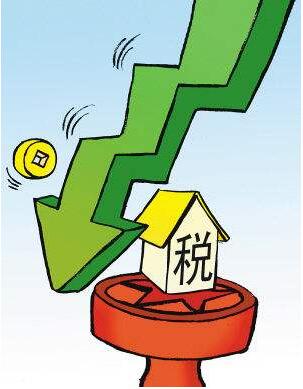
Li Xunlei from Zhongtai Securities: The three industries have the largest profit rebound
1、 The tax reduction in the manufacturing industry is in line with expectations. The 2018 government work report has clearly stated that "we will reform and improve the value-added tax, adjust the tax rate level in the direction of three or two levels, and focus on reducing tax rates in industries such as manufacturing and transportation." This round of tax cuts is already on the verge of being implemented and is expected to kick off the subsequent tax cuts.
2、 The manufacturing industry has reduced taxes by over 100 billion yuan. According to quantitative calculations, excluding the impact of the decrease in value-added tax on the increase in taxable income, the manufacturing industry is expected to reduce taxes by 78.3 billion yuan in the first three quarters, equivalent to about 104.4 billion yuan for the whole year. Among them, the upstream tax reduction is about 30.91 billion yuan, the midstream tax reduction is about 42.03 billion yuan, and the downstream tax reduction is about 31.47 billion yuan. The actual tax reduction in the automobile manufacturing industry, computer communication and other electronic equipment manufacturing industry is the highest, reaching 16.93 billion yuan and 11.17 billion yuan respectively.
3、 The upstream profit elasticity is the most obvious. According to calculations, this tax reduction is expected to drive up the total profit of the manufacturing industry by 11.2%. Affected by the profit base, the upstream, midstream, and downstream industries saw a rebound of about 15.7%, 11.2%, and 8.8%, respectively. The three industries of non-ferrous metallurgy, chemical fiber, and railway shipbuilding had the largest profit rebound, reaching 28% 9%, 18.5%, 17.5%.
4、 What will be the impact of subsequent tax reductions? If the value-added tax rate is subsequently reduced to 13%, it is expected to drive the total net profit of manufacturing enterprises to soar by 44.8%, with upstream, midstream, and downstream industries rising by 62.8%, 44.9%, and 35.1% respectively. The profit surges of non-ferrous metallurgy, chemical fiber, and railway shipbuilding industries will reach 115.6%, 74.0%, and 70.1%, respectively.
Guojin Securities: Beneficial for high-end manufacturing and technology innovation enterprises
The value-added tax adjustment measures this time include: 1) reducing the value-added tax rate for industries such as manufacturing from 17% to 16%, and reducing the value-added tax rate for industries such as transportation, construction, basic telecommunications services, and agricultural products from 11% to 10%, while keeping the 6% tax rate unchanged; 2) Raise the standard for small-scale value-added tax taxpayers from annual sales of 500000 yuan and 800000 yuan to 5 million yuan; 3) A one-time refund will be given to advanced manufacturing enterprises such as equipment manufacturing, modern service enterprises such as research and development, and power grid enterprises for input tax that has not been fully deducted within a certain period of time. The three major measures of appeal will reduce the tax burden of enterprises by more than 400 billion yuan. Although the nominal tax rate of value-added tax has only decreased by 1 percentage point in this adjustment, due to the fact that value-added tax is the largest tax type in China, the scale of tax reduction by 1% is not small, and it is expected to reach 240 billion yuan for the whole year.
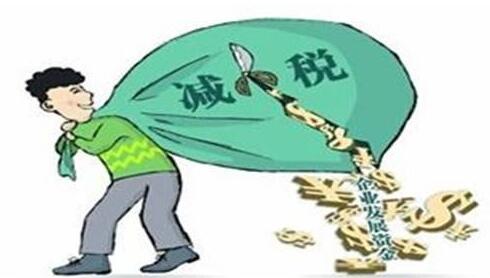
After the implementation of the business tax to value-added tax reform, Chinas value-added tax reform has been ongoing. On July 1, 2017, the value-added tax rate was reduced from four levels to three levels: 17%, 11%, and 6%, and the 13% tax rate was abolished. This is the first step taken in Chinas value-added tax reform. In the adjustment plan announced this time, three tax rates are still retained, and the 17% and 11% tax rates are reduced by 1 percentage point each. According to this years government work report, it is expected that the value-added tax will be reduced from three levels to two levels in the future, and the tax rate will further decrease. Specifically, the 10% tax rate may be merged with the 6% tax rate, and the 16% tax rate is expected to be further reduced.
Value added tax is mainly levied on the value-added part of the production and circulation process of goods, and excessively high tax rates are not conducive to enterprise innovation. This value-added tax reduction directly benefits manufacturing enterprises, especially high-end manufacturing and technology innovation enterprises. The decrease in value-added tax rates and the one-time refund of tax amounts that have not been fully deducted can help reduce the tax burden on manufacturing enterprises in the circulation process, improve their profit margins, and increase their capital accumulation, providing a foundation for expanding production scale and increasing research and development investment. This will help promote economic structural transformation, build a manufacturing powerhouse, and achieve high-quality development.
According to estimation, the net profit increased by lowering the value-added tax rate for enterprises is equal to the actual tax burden of value-added tax on enterprise income (the decrease in tax rate divided by the original applicable tax rate) (1- enterprise income tax rate). From an industry perspective, the reduction of value-added tax rates has significantly benefited industries such as construction, mining, public utilities, computers, and electrical equipment, with net profit increases of 1.34%, 1.30%, 1.00%, 0.84%, and 0.80%, respectively.


